Blog
Best Ecommerce Platform Survival Gear Brands Pick in 2025 (Updated for 2026)
Discover the best ecommerce platforms for survival, prepper, and tactical gear brands in 2026. Compare options with subscriptions, HAZMAT shipping rules, flexible payments, and scalable infrastructure.
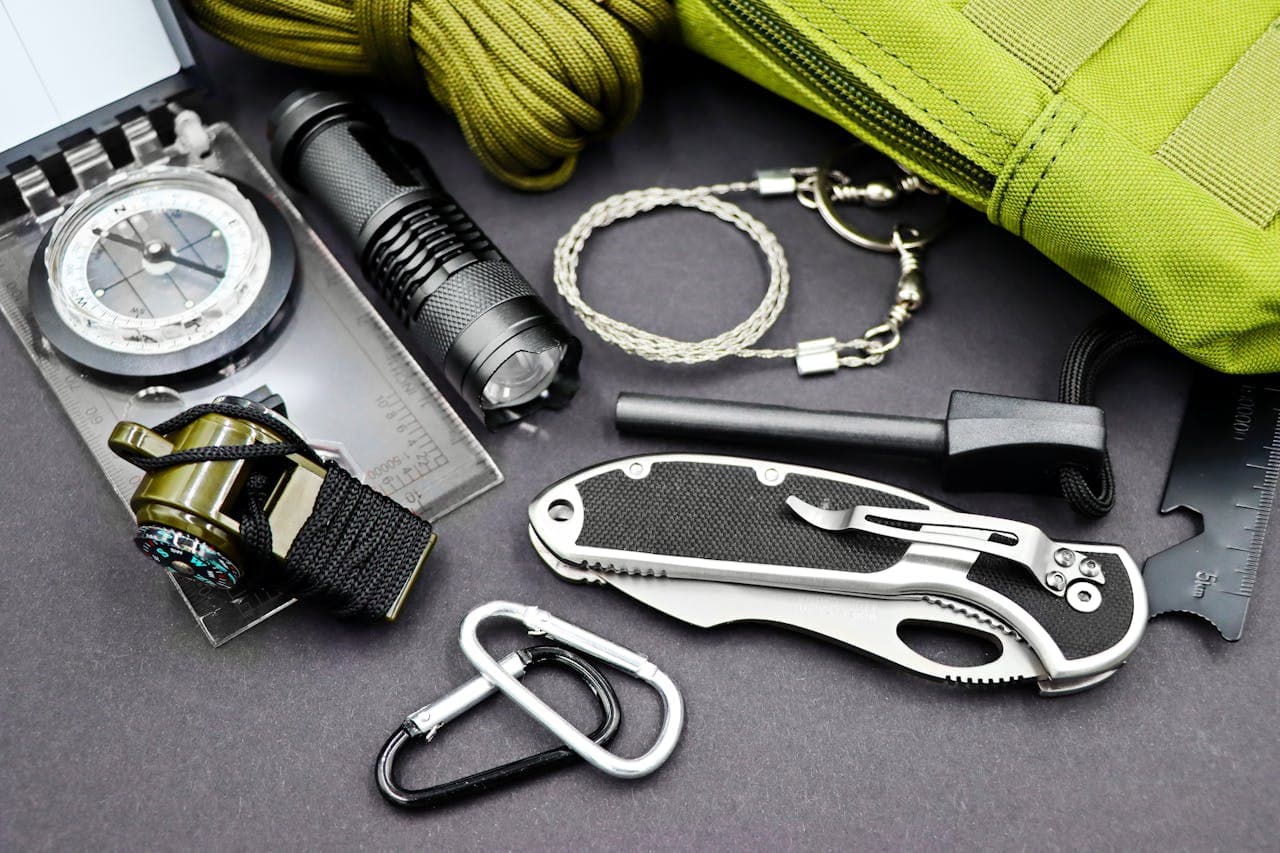
TL;DR: The best ecommerce platform survival gear brands can scale on is the one that pairs native subscription billing with unlimited loadout variants, per-SKU shipping rules for HAZMAT items, and flexible payment gateways that underwrite tactical-adjacent categories. Swell is the strongest pick for prepper gear ecommerce and tactical gear ecommerce brands that want all of that inside one API-first platform with transparent pricing on the Swell pricing page. BigCommerce is a strong hosted SaaS survival brand ecommerce platform with broader category tolerance than Shopify. WooCommerce is the self-hosted pick for outdoor tactical ecommerce merchants that want full control of hosting and gateways. Magento, commercetools, and Salesforce Commerce Cloud fit enterprise emergency prep ecommerce operators with dedicated engineering teams. Shopify Plus, Shift4Shop, Squarespace, and Wix each serve narrower slices.
Choosing the best ecommerce platform survival gear brands can actually run in 2025 is not the same operational problem as running a beauty or apparel DTC store. Prepper gear ecommerce and tactical gear ecommerce operators deal with ad-platform gray zones, carrier shipping rules on knives and lithium batteries, per-state product restrictions, heavy-weight freight for food storage and water filtration, and buyers who expect loadouts, bundles, and monthly subscription boxes that flex with their needs. The survival brand ecommerce platform underneath all of that has to do more than render a product page. This 2026 update compares ten platforms that serve survival, tactical, and prepper gear brands — with honest coverage of where each outdoor tactical ecommerce or emergency prep ecommerce operator wins and where each one struggles.
The best ecommerce platform survival gear brands can run on in 2025 has to handle all of it — payments, shipping, subscriptions, and catalog — without bolt-ons that crack under volume. Picking the best ecommerce platform survival gear shoppers actually convert on means matching platform capability to the realities of tactical underwriting, HAZMAT shipping, and loadout complexity. The category is growing at a mid-to-high single-digit CAGR, with the U.S. outdoor recreation economy generating $1.2 trillion in gross output and supporting 5 million jobs in 2023 according to BEA satellite account data. Subscription boxes layered on top — BattlBox, Crate Club, Ready Hour-style food storage plans — tap into a subscription e-commerce market projected to reach about $3.08 trillion in 2026. The brands that win are the ones whose stack supports the way buyers actually shop in this niche.
Key Takeaways
- Swell is the best ecommerce platform survival gear and tactical brands can pick if they need native subscriptions, unlimited loadout variants, and flexible payment gateways inside a modern API-first platform — with transparent plans listed on the Swell pricing page.
- BigCommerce is a strong SaaS alternative for tactical merchants who want a hosted platform with fewer Acceptable Use restrictions than Shopify and broader gateway support.
- WooCommerce and Adobe Commerce (Magento) are the right call for brands that want total control over hosting, gateways, and compliance — at the cost of more engineering overhead.
- Shopify Plus has the largest app ecosystem and is still the category default for DTC, but its Acceptable Use Policy and variant limits create real friction for tactical and weapons-adjacent merchants.
- Shift4Shop, Wix, Squarespace, Salesforce Commerce Cloud, and commercetools each serve narrower slices — from entry-level tactical shops to enterprise retail — and we cover where each one genuinely fits.
Why the Best Ecommerce Platform Survival Gear Brands Pick Isn't Shopify by Default
Ask a founder in this niche why they're replatforming and you'll hear variations of the same five problems.
Ad-platform restrictions. Meta and Google flag survival, tactical, and weapons-adjacent content at the algorithmic level. Meta restricts ads for weapons, weapons accessories, and ammunition under its advertising policies, and Google Ads prohibits the promotion of weapons and weapons accessories while applying additional review to tactical categories. That pushes traffic toward organic, email, SMS, and influencer channels — which in turn means your store has to convert harder, and your platform needs to support rich content, gated loyalty, and retention tooling.
Shipping complexity. Many survival and tactical brands sell items with carrier-level restrictions. USPS and major carriers enforce HAZMAT and DOT lithium battery shipping rules on lithium-ion flashlights, power banks, and electronics. Knife laws vary widely by state, with automatic and switchblade restrictions in places like Hawaii and certain New York jurisdictions. MREs, ammo cans, and water filters are heavy and bulky. You need a shipping engine that handles product-specific rules, zone-based rates, and per-state restrictions at the SKU level, not just a flat table.
Subscription fulfillment. Prepper boxes are a mature business model. BattlBox, one of the best-known tactical and survival gear subscription services, was acquired by Battlbrands Holdings in April 2023 for roughly $6 million — a publicly documented exit that shows the maturity of the prepper box category. Crate Club, Ready Hour food storage plans, and hundreds of smaller boxes rely on subscription billing that can handle variant loadouts, skip/swap/pause, trial tiers, and mixed carts (a subscription box plus a one-time accessory in the same checkout).
Shopify ToS gray zones. Shopify's Acceptable Use Policy restricts firearms, certain ammunition, and some weapons accessories, and enforcement extends to tactical merchants at platform discretion. Even purely tactical brands — knives, plate carriers, bugout bags — live with the knowledge that an account review or chargeback pattern can trigger enforcement. That uncertainty drives some merchants to platforms with clearer underwriting pathways or to self-hosted stacks they control end to end.
Variant and catalog complexity. Loadouts, color/camo combinations, sizes, and subscription tiers can easily push a single product past 100 variants. Shopify raised the product variant limit to 2,048 variants per product in 2025 across all plans, but many themes, apps, and downstream integrations still cap at 100 variants — which is the real catalog-complexity concern for tactical loadouts. Brands that want true unlimited variants without theme or app workarounds typically either split SKUs (bad for UX and inventory) or move platforms.
The operational decision tree for picking the best ecommerce platform survival gear brands actually convert on usually looks like this:
flowchart TD
A[Survival / Tactical / Prepper Brand] --> B{Subscription boxes in next 12 months?}
B -->|Yes| C{Loadouts > 100 variants?}
B -->|No| D{Catalog near Shopify AUP line?}
C -->|Yes| E[Swell — native subs + unlimited variants]
C -->|No| F{Need Authorize.net or specialty gateway?}
F -->|Yes| E
F -->|No| G[Swell or BigCommerce + Recharge]
D -->|Yes| H{Dev team in-house?}
D -->|No| I[Shopify Plus or BigCommerce]
H -->|Yes| J[WooCommerce or Magento]
H -->|No| K[BigCommerce or Swell]
style E fill:#e8f7ee
style K fill:#e8f7ee
How We Evaluated the Best Ecommerce Platform Survival Gear Options
We focused on criteria that matter specifically for survival, tactical, and prepper gear brands when they evaluate the best ecommerce platform survival gear stack for their business:
- Category tolerance — does the platform's Acceptable Use Policy allow tactical, survival, and weapons-adjacent merchandise?
- Payment gateways — does it support Stripe, Braintree, Authorize.net, NMI, and other gateways that underwrite tactical-adjacent merchants?
- Shipping rule engine — can you configure per-state product restrictions, HAZMAT flags, weight-based freight, and multi-zone rates?
- Native subscriptions — subscription boxes without a third-party app, with skip/swap/pause, trials, and mixed carts.
- Variant flexibility — unlimited product variants, custom attributes, and loadout-level configurability.
- Bundle builder — native support for bundles, boxes, and configurable kits.
- Headless and API depth — can you build custom storefronts, loyalty programs, and back-office tooling via clean APIs?
- Pricing transparency — real published pricing versus "contact sales" for everything.
We verified G2 ratings and published pricing where available. For Swell, pricing comes directly from Swell's website; other platforms are sourced from their own pricing pages and published reviews.
Quick Comparison of the Best Ecommerce Platform Survival Gear Options
| Platform | Best For | Native Subscriptions | Variant Flexibility | Category Tolerance | G2 Rating |
|---|---|---|---|---|---|
| Swell | API-first survival and tactical brands with native subscriptions | Yes — native, no app fees | Unlimited | Flexible — merchant-driven | Highly rated |
| Adobe Commerce (Magento) | Enterprise tactical retailers with complex catalogs | Via extensions | Unlimited | Flexible (self-managed) | 4.0 |
| BigCommerce | Mid-market tactical brands wanting a hosted platform | Via Bold/Recharge | 600 options | Generally permissive | 4.2 |
| commercetools | Enterprise composable commerce | Via custom build | Unlimited | Neutral (self-managed) | 4.3 |
| Salesforce Commerce Cloud | Large enterprise retail | Via custom build | Flexible | Case-by-case | 4.0 |
| Shift4Shop | Small tactical shops on Shift4 payments | Basic | Unlimited | Permissive via Shift4 underwriting | 3.7 |
| Shopify Plus | DTC brands that avoid restricted SKUs | Via Recharge/Bold | 2,000 variants (Plus) | Restrictive (AUP) | 4.4 |
| Squarespace Commerce | Design-forward entry brands | Basic | Limited | Restrictive | 4.4 |
| Wix eCommerce | DIY entry-level brands | Basic | Limited | Restrictive | 4.2 |
| WooCommerce | Self-hosted WordPress tactical brands | Via extensions | Unlimited | Fully flexible (self-hosted) | 4.4 |
G2 ratings and pricing sourced from each vendor's official pricing page, G2 category listings, and published platform documentation. Where pricing is not public, we say "contact for pricing" rather than guess.
1. Swell — The Best Ecommerce Platform Survival Gear and Tactical Brands Should Evaluate First
Pricing: See Swell's published pricing page for current plans, including a free trial. Plans are transparent and scale with the business.
Customer reception: Strong — see customer stories and case studies on the Swell site.
Best for: Survival, tactical, and prepper gear brands that want native subscription boxes, unlimited loadout variants, flexible payment gateways, and a rule-based shipping engine inside the best ecommerce platform survival gear merchants can run without stitching together multiple Shopify apps.
Swell is the API-first headless ecommerce platform with native subscription support, unlimited product variants, and a visual store builder, and it's the best ecommerce platform survival gear and tactical brands can adopt without stitching five tools together. For survival and tactical brands, that combination matters more than it does in a typical DTC category. Subscription boxes (monthly EDC, bugout gear, food storage, water filtration) need a billing engine that handles skip, swap, pause, trial tiers, and variant changes mid-subscription. Loadouts need unlimited variants, custom attributes, and custom data models — not just "size" and "color" on a 100-variant cap. And the shipping engine needs to express rules like "this product cannot ship to these states" and "HAZMAT flag triggers ground-only." Swell treats all of this as part of the platform, not bolt-on tooling.
The subscription engine covers what prepper and tactical box operators actually hit in production: flexible billing intervals, pause and resume, product swaps (different loadouts each month), skip a cycle, subscription-only discounts, trial periods, and automated retry logic on failed payments. Mixed carts — where a customer buys a one-time knife or flashlight and a monthly box in the same checkout under one payment — are native, not a plugin. That matters because mixed-cart flows materially improve AOV and reduce friction for brands that sell both single-purchase SKUs and recurring boxes. The subscription box market is estimated at roughly $42.5 billion in 2025 and projected to reach about $124.1 billion by 2034 per IMARC Group, and the brands capturing it are the ones whose platform can flex with the buyer.
On payments, Swell supports Stripe, Braintree, PayPal, Amazon Pay, Apple Pay, Google Pay, Affirm, Klarna, Resolve for B2B net terms, and Authorize.net — which is essential for tactical and weapons-adjacent merchants who need an additional gateway option. Swell's payment gateway documentation covers the full set, and you can run multiple gateways in parallel for redundancy. Merchants with Authorize.net accounts that underwrite tactical-adjacent categories can plug directly in without middleware.
On shipping, Swell supports product-specific shipping rules (flag a switchblade SKU as non-shippable to specific states), shipping zones, multiple fulfillment locations, and integration with ShipStation for carrier rate shopping and label printing. You can layer weight-based, zone-based, and product-specific rules without writing custom code.
On architecture, Swell gives developers Frontend and Backend APIs, full-stack commerce apps, serverless functions, CLI tooling, and clean API documentation. You can run Swell fully headless with Next.js, Nuxt, or any modern framework — see the Next.js + Swell guide — or use the visual store builder if you want to ship fast without engineering. Liquid theme support and Shopify theme compatibility mean teams migrating from Shopify can bring their existing frontend work with them. For a primer on the approach, see the headless commerce guide.
On catalog, Swell supports unlimited variants and attributes. That means a plate carrier with size, color, MOLLE config, and optional add-on pouches can live as a single product with dozens of configurations — not 30 separate SKUs. Bundles, configurable kits, and "build-your-own-loadout" flows are native, not a separate app.
The operational stack for a survival brand ecommerce platform running on Swell typically looks like this:
flowchart LR
subgraph Catalog[Catalog + Loadouts]
C1[Unlimited Variants]
C2[Custom Attributes]
C3[Configurable Kits / Bundles]
end
subgraph Subs[Subscriptions]
S1[Monthly Box]
S2[Skip / Swap / Pause]
S3[Mixed Cart: Box + One-Time]
end
subgraph Pay[Payments]
P1[Stripe]
P2[Authorize.net]
P3[Braintree / PayPal / Klarna]
end
subgraph Ship[Shipping Rules]
SH1[Per-SKU State Restrictions]
SH2[HAZMAT / Lithium Flags]
SH3[ShipStation Rate Shop]
end
Catalog --> Subs
Subs --> Pay
Pay --> Ship
Ship --> Done[Order Ships]
style Done fill:#e8f7ee
Key features
- Native subscription plans with flexible billing intervals, trials, pause/resume, and skip/swap
- Mixed carts: one-time products and subscription boxes in a single checkout, under one payment
- Unlimited product variants, custom attributes, and custom data models
- Multi-gateway support including Stripe, Braintree, Authorize.net, PayPal Direct, Amazon Pay, Klarna, and Resolve for B2B
- Product-specific shipping rules with zone-based and state-level restrictions
- Multi-currency across 230 currencies and 170 languages as native features
- Visual store builder plus fully headless option — serves merchants AND developers
- Frontend + Backend APIs, serverless functions, CLI, and full-stack commerce apps
- Native bundles, configurable kits, and "build-your-own-loadout" product types
- ShipStation integration for carrier rate shopping and label printing
- Klaviyo, Omnisend, and Yotpo integrations for email, SMS, and reviews
- B2B-native features for wholesale and dealer programs
Best for
Survival, tactical, and prepper brands that want subscription boxes, unlimited loadout variants, flexible payment gateways, and per-SKU shipping rules inside a single platform — without stitching together Recharge, a variant app, a bundle app, and a shipping rules app on top of a template-bound frontend. Swell serves startups and enterprise brands alike — it isn't enterprise-only, and it isn't no-code-only. It's API-first with a visual builder on top.
Pricing
Plans and trial details are listed on the Swell pricing page. Swell does not list pricing on third-party review sites, so this is the authoritative source.
2. Adobe Commerce (Magento) — Best for Enterprise Tactical Retailers with Complex Catalogs
Pricing: Contact Adobe for pricing — typical deployments range from six figures annually for Adobe Commerce Cloud.
G2 rating: 4.0
Best for: Large tactical retailers, multi-brand groups, and B2B-heavy operators with complex catalog, pricing, and fulfillment requirements.
Adobe Commerce, formerly Magento, is an enterprise-grade, open-core ecommerce platform. It powers roughly 0.2% of all websites and 1.5% of all e-commerce systems surveyed per W3Techs, concentrated in mid-market and enterprise retail. For survival and tactical brands with massive catalogs — thousands of SKUs across knives, bags, apparel, food storage, and accessories — Magento's catalog depth, custom attribute system, and B2B module are strong. Advanced pricing rules, tiered wholesale pricing, customer-group pricing, and custom shipping logic are all supported out of the box.
The trade-off is cost and operational overhead. Adobe Commerce implementations typically require a specialist agency or an in-house development team. Upgrades, security patches, and extension conflicts are ongoing operational load. For a tactical brand with a dedicated dev team and a catalog that genuinely needs Magento's depth, it's a credible choice. For a growth-stage brand trying to move fast, it's heavier than necessary.
Magento doesn't restrict tactical merchandise at the platform level (it's open-core and self-hostable), so category tolerance depends on your hosting provider, payment gateway, and any third-party services in the stack.
Key features
- Multi-store, multi-site, multi-brand architecture from a single admin
- Deep B2B module: customer-specific pricing, quote workflows, net terms, ERP integration
- Advanced catalog: unlimited variants, configurable products, bundles, grouped products
- Complex promotion and pricing rules
- Strong headless PWA Studio for custom storefronts
Limitations
- High total cost of ownership and long implementation cycles
- Requires specialist development and ongoing maintenance
- Extension marketplace quality is uneven and upgrades can be disruptive
Best for
Established tactical retailers and multi-brand groups with the engineering capacity to maintain a Magento stack, complex B2B requirements, and catalogs large enough to justify the overhead. See our Magento alternatives guide and Adobe Commerce to Swell migration path for teams considering a move.
3. BigCommerce — Best Mid-Market Hosted Alternative to Shopify
Pricing: Plans start around $39/mo for Standard, with Plus at $105/mo and Pro at $399/mo; Enterprise is contact-sales. Pricing listed on the BigCommerce pricing page.
G2 rating: 4.2
Best for: Mid-market survival and tactical brands that want a hosted SaaS platform with fewer category restrictions than Shopify and broader gateway support.
BigCommerce is the closest direct alternative to Shopify in the SaaS category. It serves merchants in more than 150 countries and has historically been friendlier to tactical, knife, and survival merchants than Shopify at the underwriting level — category enforcement is more case-by-case and less aggressive. BigCommerce supports 600 product options (variants × modifiers), which handles most tactical loadouts without the 100-variant wall Shopify hits. The API is broader than Shopify's in several places — open pricing, open inventory, open orders — which makes BigCommerce a credible partial-headless option.
For subscription boxes and prepper plans, BigCommerce relies on third-party apps like Recharge or Bold Subscriptions rather than a native subscription engine. That means subscription-related fees stack on top of platform fees, and mixed-cart logic (one-time plus subscription in the same checkout) depends on the app. The app ecosystem is smaller than Shopify's but the core platform is more developer-friendly.
Theme flexibility is reasonable, but like Shopify, you're tied to the platform's underlying rendering model unless you go full headless via the Storefront API. For merchants that want a hosted SaaS that stays out of the way, BigCommerce is the go-to. See the Swell vs BigCommerce comparison for a deeper look at where each one fits.
Key features
- Hosted SaaS with strong uptime and PCI compliance
- 600 product options per product (variants × modifiers)
- Open Storefront, Catalog, and Orders APIs
- Native B2B Edition for wholesale workflows
- Broad payment gateway support including Authorize.net, PayPal, and Stripe
Limitations
- Subscriptions require third-party apps (Recharge, Bold)
- Smaller app ecosystem than Shopify
- Transaction fee thresholds on lower-tier plans trigger plan upgrades
Best for
Mid-market tactical and survival brands that want a hosted platform with more category tolerance than Shopify and more flexibility than a pure closed SaaS.
4. commercetools — Best for Enterprise Composable Commerce
Pricing: Contact for pricing — enterprise contracts.
G2 rating: 4.3
Best for: Global enterprise brands with dedicated engineering capacity and complex multi-region, multi-brand commerce needs.
commercetools is an enterprise-grade, MACH-based (Microservices, API-first, Cloud-native, Headless) composable commerce platform. It serves enterprise brands including Audi, Ulta, and AT&T via its composable architecture. For tactical and survival brands with the budget and engineering capacity to assemble their own stack from best-of-breed services, commercetools is credible. Catalog, cart, checkout, and orders all expose clean APIs, and the platform is genuinely retail-grade.
The trade-off is complexity and cost. commercetools requires significant dev resources to get running, and most implementations layer it with a separate CMS, search provider, and subscription billing system. For sub-enterprise tactical brands, it's over-specced — you're paying enterprise pricing for capabilities you won't use. See the commercetools alternatives guide and the commercetools to Swell migration path for teams that have outgrown, or can't justify, the enterprise commitment. Swell offers similar API-first flexibility at a fraction of cost and complexity, with a visual builder on top for non-technical users.
Key features
- Composable microservices for catalog, cart, orders, customers
- API-first architecture with GraphQL and REST support
- Multi-region, multi-currency, multi-brand from day one
- Strong B2B support for wholesale workflows
Limitations
- Enterprise pricing and long implementation cycles
- Requires engineering-heavy teams
- No native subscription billing — requires integration with third-party billing
Best for
Enterprise tactical and outdoor brands with global scale, dedicated engineering teams, and catalog or localization needs that exceed what a SaaS platform can deliver.
5. Salesforce Commerce Cloud — Best for Enterprise Retail with Deep Personalization
Pricing: Contact for pricing — typical enterprise deployments start in the low-to-mid six figures annually.
G2 rating: 4.0
Best for: Large enterprise retailers with multi-brand portfolios and a heavy Salesforce stack already in place.
Salesforce Commerce Cloud (formerly Demandware) is the enterprise commerce platform inside the broader Salesforce ecosystem. It's strong on personalization via Einstein AI, deeply integrated with Marketing Cloud and Service Cloud, and credible for enterprise tactical retailers that already run Salesforce CRM. Implementation cycles are long and require specialist partners.
For most survival, tactical, and prepper brands, Commerce Cloud is over-specced. Unless you're a billion-dollar outdoor retailer with multiple brands and a Salesforce-heavy stack, the cost and complexity don't pay back. Category tolerance is case-by-case and handled via enterprise sales underwriting. See the Commerce Cloud alternatives guide for teams evaluating the move down-market.
Key features
- Einstein AI personalization across merchandising and search
- Deep Salesforce ecosystem integration
- Multi-brand, multi-region, multi-currency
- Enterprise-grade SLAs and support
Limitations
- Pricing and implementation cost are prohibitive outside enterprise
- Slow time-to-launch compared to modern SaaS
- Heavy ongoing operations requirement
Best for
Enterprise outdoor and tactical retailers with a Salesforce-centric stack, multi-brand portfolios, and the budget for a multi-quarter implementation.
6. Shift4Shop — Best Entry-Level Platform for Shift4 Payments Users
Pricing: End-to-end free on the U.S. plan when using Shift4 payment processing; otherwise paid tiers starting around $29/mo. Pricing listed on the Shift4Shop pricing page.
G2 rating: 3.7
Best for: Small tactical and survival shops that can underwrite with Shift4 and want a low-cost hosted platform.
Shift4Shop (formerly 3dcart) is a hosted ecommerce platform owned by Shift4 Payments. The headline is that it's free in the U.S. if you use Shift4 as your processor, which is meaningful for smaller tactical merchants on tight budgets. Shift4's payment underwriting has historically been more tolerant of tactical and weapons-adjacent categories than some mainstream processors, which matters for knife shops and survival gear merchants that have been declined elsewhere.
The platform has a full feature set — catalog, checkout, marketing, basic reporting — and supports unlimited variants and products. The UX and administrative tooling feel dated compared to modern SaaS competitors, and the app ecosystem is smaller. For a new tactical brand that wants to launch cheaply on a processor that accepts the category, Shift4Shop is a reasonable starting point. Brands typically outgrow it once subscription boxes, complex catalog, or serious storefront customization enter the picture.
Key features
- Free plan with Shift4 payment processing
- Unlimited products, variants, and staff users
- Built-in order management, CRM, and email marketing
- Broad payment gateway options beyond Shift4
Limitations
- Dated admin UI and theme editor
- Smaller app ecosystem
- Subscription support is basic
- Customer support quality varies on free tier
Best for
New or small tactical and survival brands that want to launch on a low-cost hosted platform with Shift4 payment processing, and don't yet need native subscriptions or headless flexibility.
7. Shopify Plus — Best for DTC Brands That Avoid Restricted SKUs
Pricing: Starting at $2,300/mo on a 3-year term or $2,500/mo on a 1-year term, with a variable fee model (roughly 0.35%–0.40%) for merchants above ~$800K/month in sales. Pricing listed on the Shopify Plus pricing page.
G2 rating: 4.4
Best for: DTC tactical and outdoor brands whose catalog stays safely within Shopify's Acceptable Use Policy and who value the app ecosystem above maximum category tolerance.
Shopify is the category leader in DTC commerce. Shopify reports its platform powers more than 5 million active stores worldwide, and the app marketplace is by far the largest in ecommerce. For survival and tactical brands whose SKUs are clearly within policy — outdoor apparel, camping gear, food storage, water filtration, navigation, first aid — Shopify Plus is polished, well-supported, and quick to launch.
Where Shopify Plus creates friction for this niche is on three fronts. First, the Shopify Acceptable Use Policy operates on principles-based enforcement, and tactical merchants near the policy line — plate carriers, certain knives, and some accessories — have triggered reviews in practice. Second, subscription boxes require third-party apps like Recharge or Bold, which layer fees on top of Shopify Plus platform fees. Third, while Shopify raised its per-product variant limit to 2,048 in 2025, many Shopify themes, apps, and integrations still cap at the legacy 100-variant ceiling — a real constraint for complex loadouts.
The app ecosystem and theme library are genuine strengths, and we're not arguing otherwise. See our Shopify alternative, Swell vs Shopify comparison, and Shopify to Swell migration guide for teams evaluating the move.
Key features
- Largest app ecosystem in ecommerce
- Strong theme library and Liquid templating
- Shopify Payments and broad gateway support (excluding restricted categories)
- Shopify Flow automation and POS integration
- Shopify Plus launchpad, scripts, and checkout extensibility
Limitations for this niche
- Acceptable Use Policy can restrict tactical and weapons-adjacent SKUs at platform discretion
- Native subscription engine is not first-party; third-party apps add cost and integration overhead
- 100-variant standard limit (2,000 on Plus with workarounds)
- Payment gateway choice is constrained when category flags trigger underwriting review
Best for
DTC outdoor, camping, and survival brands whose catalog stays clearly within Shopify's policy line and who prioritize the app ecosystem and fast launch time over deeper category flexibility.
8. Squarespace Commerce — Best Design-Forward Entry Platform
Pricing: Commerce plans start at $27/mo (Basic) and $49/mo (Advanced). Pricing listed on the Squarespace pricing page.
G2 rating: 4.4
Best for: Small survival and outdoor brands that prioritize design and brand storytelling on a straightforward product catalog.
Squarespace Commerce is a design-forward website builder with ecommerce layered on. Templates are polished, and for survival brands that want a content-rich storefront (field journals, gear guides, brand storytelling) with a modest product catalog, it's a credible option. Squarespace restricts certain weapons and regulated items, so survival brands need to verify category fit before committing.
The trade-off is that Squarespace is not a deep ecommerce platform. Variant depth, shipping rule engine, subscription logic (basic intervals only), and API access are all limited. It's a good fit for a small, tightly curated catalog with simple fulfillment — not for a brand running subscription boxes or loadout-heavy SKUs. See the Squarespace alternatives guide for brands ready to move up-market.
Key features
- Design-forward templates and drag-and-drop editor
- Integrated blog, email, and scheduling tools
- Built-in payments via Stripe, Square, or PayPal
- Basic subscription intervals for simple recurring products
Limitations
- Limited shipping rule engine
- Restricted category coverage for weapons-adjacent items
- Thin API and limited extensibility
- Subscription logic is basic — no skip/swap/pause parity
Best for
Small survival and outdoor brands with a tight catalog, strong brand storytelling needs, and minimal subscription or variant complexity.
9. Wix eCommerce — Best for DIY Entry-Level Brands
Pricing: Business plans start at $27/mo (Core) and scale to $59/mo (Business Elite). Pricing listed on the Wix pricing page.
G2 rating: 4.2
Best for: Very small survival and outdoor brands that want a DIY all-in-one website with basic ecommerce.
Wix is a drag-and-drop website builder with ecommerce bolted on. For a hobbyist tactical brand or a side hustle launching a first product line, it's accessible and cheap. Templates are abundant, the editor is approachable, and built-in payments work via Wix Payments, Stripe, or PayPal.
Limitations are real for this niche. The shipping rule engine is thin, variant depth is capped, and there's no real native subscription engine beyond basic recurring intervals. Category tolerance for weapons-adjacent merchandise is conservative and handled at the payments layer. For anything beyond a first DTC product line, Wix outgrows quickly.
Key features
- Drag-and-drop editor with large template library
- Built-in payments, marketing, and CRM
- App market for basic extensions
Limitations
- Thin API and limited customization
- Weak shipping rule engine
- No native subscription engine for complex boxes
- Limited category tolerance for tactical merchandise
Best for
Hobbyist or very early-stage tactical and outdoor brands launching their first product line with minimal complexity.
10. WooCommerce — Best Self-Hosted Option for Tactical Brands That Want Full Control
Pricing: Core WooCommerce plugin is free; real costs are hosting, themes, premium extensions, and payment gateway fees. Expect $30-300/mo for a serious production stack.
G2 rating: 4.4
Best for: Tactical, survival, and prepper brands that want full control over hosting, payment gateways, and category policy — typically with an in-house developer or a trusted agency.
WooCommerce is the open-source WordPress ecommerce plugin and powers an estimated 36% of all online stores, making it the most-used ecommerce software on the web. For survival and tactical brands, the appeal is straightforward: you host the store, you choose the payment gateway (Authorize.net processes more than 1 billion transactions per year and is widely supported), and you set your own category policy. There's no platform-level AUP enforcement because there's no platform — you run it.
The extension ecosystem covers subscriptions (WooCommerce Subscriptions), bundles, advanced shipping rules, memberships, and wholesale B2B. With enough extensions and developer time, you can build essentially any commerce flow WooCommerce doesn't do natively. About us | Authorize.net
The trade-off is operational overhead. You're responsible for hosting, performance, security patching, plugin compatibility, and uptime. A tactical brand running WooCommerce in production typically has a WordPress-literate developer or agency on retainer. For brands that want full control and have the ops capacity, WooCommerce is a durable choice. See the best WooCommerce alternatives for teams that want a managed platform with similar flexibility.
Key features
- Open-source and fully self-hosted
- Extension ecosystem: subscriptions, bundles, memberships, B2B
- Full payment gateway flexibility including Authorize.net, NMI, and high-risk gateways
- No platform-level category restrictions
- Deep WordPress content, SEO, and membership ecosystem
Limitations
- Hosting, performance, and security are your responsibility
- Plugin compatibility and upgrade conflicts require ongoing maintenance
- Total cost of extensions adds up quickly
- Not a SaaS — no managed uptime SLA
Best for
Tactical, survival, and prepper brands that want full control of their stack, a high-risk-friendly payment gateway, and a content-heavy WordPress site under one roof — with the dev capacity to maintain it.
Side-by-Side Feature Matrix
| Feature | Swell | Adobe Commerce | BigCommerce | commercetools | SFCC | Shift4Shop | Shopify Plus | Squarespace | Wix | WooCommerce |
|---|---|---|---|---|---|---|---|---|---|---|
| Native subscriptions | Yes | ~ (extension) | ~ (app) | No (custom) | No (custom) | ~ | ~ (app) | ~ (basic) | ~ (basic) | ~ (extension) |
| Mixed cart (one-time + sub) | Yes | ~ | ~ | Custom | Custom | No | ~ | No | No | ~ |
| Unlimited variants | Yes | Yes | 600 options | Yes | Flexible | Yes | 2,048 (theme/app caps vary) | No | No | Yes |
| Product-specific shipping rules | Yes | Yes | Yes | Custom | Yes | Yes | Yes | Limited | Limited | Yes |
| [Authorize.net](http://Authorize.net) gateway | Yes | Yes | Yes | Custom | Yes | Yes | Yes (limited) | No | No | Yes |
| B2B / wholesale native | Yes | Yes | Yes (Edition) | Yes | Yes | ~ | ~ (plan) | No | No | ~ (extension) |
| Headless API | Yes | Yes (PWA) | Yes | Yes | Yes | Limited | Yes (Hydrogen) | No | Limited | Yes (REST) |
| Visual store builder | Yes | No | Yes | No | No | Yes | Yes | Yes | Yes | ~ (theme) |
| Category tolerance (tactical) | Flexible | Self-managed | Generally OK | Self-managed | Case-by-case | Flexible | Restrictive | Restrictive | Restrictive | Fully flexible |
| Transparent pricing | Yes | No | Yes | No | No | Yes | Yes | Yes | Yes | Self-hosted |
"~" indicates partial support, typically via extension or third-party app. "Custom" means you must build the capability yourself.
How to Choose the Best Ecommerce Platform Survival Gear Brands Should Run On
The right platform depends on what's limiting you today and where you're going in the next 18 months.
| If you need... | Choose |
|---|---|
| Native subscription boxes, unlimited loadout variants, and flexible gateways inside one platform | Swell |
| A hosted SaaS with more category tolerance than Shopify and a mid-market budget | BigCommerce |
| Full control over hosting, gateways, and category policy, with in-house dev capacity | WooCommerce |
| Enterprise-scale catalog, B2B depth, and the engineering team to run Magento | Adobe Commerce |
| A low-cost entry platform with Shift4 payment underwriting for tactical-adjacent SKUs | Shift4Shop |
| The largest app ecosystem and a catalog that stays clearly within policy | Shopify Plus |
| Enterprise composable commerce with multi-region, multi-brand complexity | commercetools |
| Enterprise retail with a Salesforce-heavy stack already in place | Salesforce Commerce Cloud |
| A design-forward small catalog with minimal subscription needs | Squarespace Commerce |
| A DIY first-product launch on a tight budget | Wix eCommerce |
Three questions help narrow the shortlist quickly when comparing the best ecommerce platform survival gear contenders:
- Are subscription boxes part of your business model, now or within 12 months? If yes, prioritize platforms with native subscription engines (Swell) over Shopify-plus-Recharge stacks. App fees and integration complexity compound at scale.
- How close to the policy line is your catalog? Plate carriers, fixed-blade knives, lithium-heavy electronics, and some tactical accessories sit near Shopify's AUP. If you're close, prioritize BigCommerce, WooCommerce, or Swell over Shopify Plus.
- Do you have in-house dev capacity? WooCommerce and Magento assume yes. Swell, BigCommerce, and Shift4Shop work without it. commercetools and SFCC require it by default.
Final Verdict: Picking the Best Ecommerce Platform Survival Gear Brands Can Actually Grow On
The honest answer is that no one platform is the best ecommerce platform survival gear brands universally should use. The right pick depends on where you are today and where you're going.
- For API-first brands with subscription boxes, complex loadouts, or multi-gateway needs, Swell is the strongest option and the best ecommerce platform survival gear operators can scale on. Native subscriptions, unlimited variants, Authorize.net support, product-specific shipping rules, and a visual builder on top of a real headless platform — in one product, not five stitched together.
- For mid-market brands that want a hosted SaaS with broader category tolerance than Shopify, BigCommerce is credible. You'll give up native subscriptions and depend on apps for recurring revenue.
- For brands that want full control of hosting, gateways, and category policy, WooCommerce is the classic self-hosted choice — with the ops capacity requirement that implies.
- For enterprise retailers with massive catalogs and dedicated engineering, Adobe Commerce or commercetools are defensible — if you have the budget and the team.
- For small catalogs and first launches, Shift4Shop, Squarespace, or Wix can get you live cheaply — with the understanding that you'll likely replatform within a couple of years.
If your primary need is native subscriptions plus loadout-level flexibility plus flexible payment gateways in one platform, Swell is the clearest answer for the best ecommerce platform survival gear merchants can build on.
Frequently Asked Questions
What is the best ecommerce platform survival gear subscription boxes should run on?
For subscription boxes specifically, the most important features are native subscription billing, mixed carts (box plus one-time item in the same checkout), skip/swap/pause logic, and variant-level control over what ships each month. Swell supports all of these natively without app fees. Shopify Plus plus Recharge is the most common incumbent stack but stacks platform plus app fees and depends on Shopify's policy line for the rest of your catalog. BigCommerce with Recharge works similarly. WooCommerce with WooCommerce Subscriptions is viable if you have dev capacity.
Can I sell knives and tactical accessories on Shopify?
Non-restricted knives and most tactical accessories (bags, apparel, flashlights, water filtration) are generally allowed under Shopify's Acceptable Use Policy, but enforcement can be inconsistent for merchants near the policy line — especially for items like plate carriers, certain fixed-blade knives, or weapons-adjacent accessories. Brands with catalogs close to the AUP line often run a secondary platform (BigCommerce, WooCommerce, or Swell) for the flagged SKUs or move the entire catalog off Shopify to reduce policy risk.
Do I need Authorize.net for a tactical ecommerce store?
Not strictly. Stripe, Braintree, and PayPal all process tactical-adjacent merchandise for the majority of merchants. Authorize.net is useful as a secondary gateway for redundancy, for merchants whose category has triggered Stripe or PayPal reviews, and for brands that prefer traditional credit-card processing relationships. Authorize.net processes more than 1 billion transactions per year and is widely integrated across ecommerce platforms. Swell supports both Stripe and Authorize.net natively, and you can run them in parallel.
How do I handle per-state shipping restrictions for knives and batteries?
You need a platform with product-specific shipping rules at the SKU level. Flag the specific SKUs (automatic knives, certain lithium batteries, HAZMAT items) and exclude the restricted states or carriers from the shipping rules. Swell, WooCommerce, BigCommerce, and Magento all support this natively or via extensions. Shopify and Shift4Shop support it at the platform level with some additional configuration. Squarespace and Wix have thinner rule engines and generally aren't a fit for catalogs with heavy per-state restrictions.
What's the cheapest best ecommerce platform survival gear brands can launch on?
Shift4Shop's free plan on Shift4 payments or WooCommerce on budget hosting are the two cheapest starting points — both well under $50/mo at launch. The trade-off is that both require more DIY work on design, variant structure, and subscription logic. Shopify Basic at $29/mo and Wix Business at $27/mo are more polished but have less category tolerance and no native subscriptions. Swell's entry plans and free trial are on the Swell pricing page.
Can I run a headless storefront on the best ecommerce platform survival gear brands choose?
Yes — Swell, BigCommerce, Adobe Commerce, commercetools, Salesforce Commerce Cloud, and WooCommerce all support headless architectures. Swell is API-first from day one, meaning every feature is accessible via the Frontend and Backend APIs. See the headless commerce guide and the Next.js + Swell build guide for reference implementations. For tactical brands specifically, headless is useful because it lets you build a richer storytelling frontend, better SEO, and faster load times — all of which matter more when paid ads are restricted.
Does Shopify's variant limit affect the best ecommerce platform survival gear merchants choose?
Yes, for loadout-heavy catalogs. Shopify raised the per-product variant cap to 2,048 in 2025, but many themes, apps, and integrations still cap at the legacy 100-variant ceiling — which is the practical constraint for loadouts. A single plate carrier with five sizes, six colors, four MOLLE configurations, and optional attachments can exceed 100 variants quickly. Workarounds include splitting the product into multiple SKUs (bad for UX), using configurable apps, or moving to a platform with unlimited variants like Swell, BigCommerce (via 600 modifier options), WooCommerce, or Adobe Commerce.
How big is the best ecommerce platform survival gear market today?
Industry analysts peg the global survival gear market at growing in the mid-to-high single-digit CAGR range, and the U.S. outdoor recreation economy generated $1.2 trillion in gross output and supported 5 million jobs in 2023 per BEA satellite account data. The subscription box layer on top is meaningful too — the global subscription e-commerce market is projected to reach about $3.08 trillion in 2026, with survival and tactical boxes (BattlBox, Crate Club, Ready Hour) as a durable niche inside that.