Blog
37 Cannabis Ecommerce Statistics That Reveal Platform Infrastructure Needs
Explore 37 key cannabis ecommerce statistics revealing why dispensaries need scalable, compliance-ready, API-first platforms to support rapid market growth, product complexity, and digital-first consumer behavior.
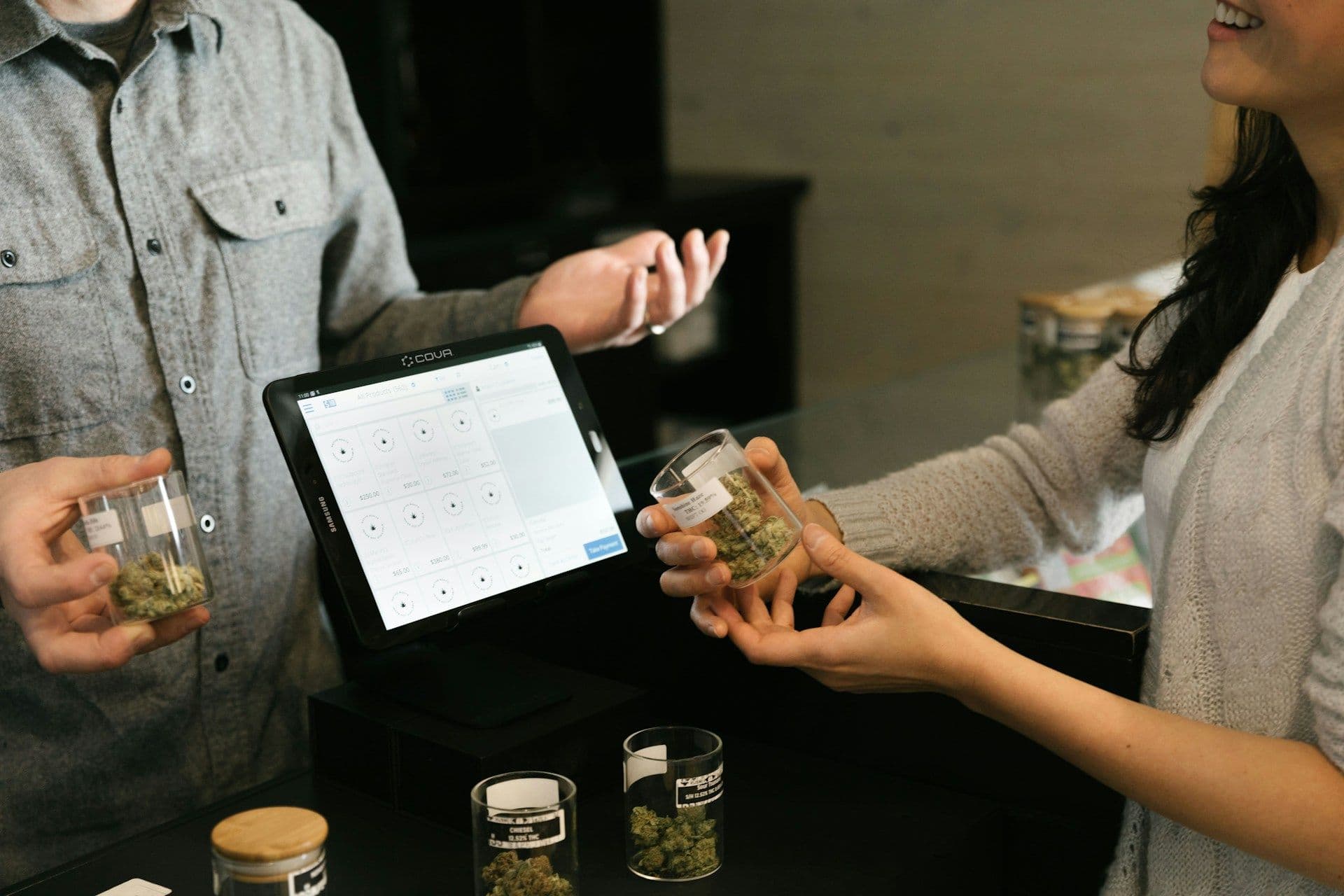
Data-driven insights showing how legal cannabis retailers require scalable, compliance-ready commerce platforms to capture explosive market growth
The legal cannabis market presents unprecedented ecommerce opportunities, with the global market projected to reach $134.4 billion by 2030, yet dispensary operators face unique technical challenges. From complex product variants tracking potency levels to multi-state compliance requirements and age-restricted checkout flows, traditional ecommerce platforms struggle to support cannabis retail at scale. Headless commerce platforms built for API-first flexibility enable dispensaries to customize every aspect of their digital storefront while maintaining regulatory compliance across jurisdictions—a critical capability as online channels now represent 25-30% of dispensary revenue.
Key Takeaways
- Market growth demands scalable infrastructure – Global cannabis ecommerce will quadruple from $33.8B to $134.4B by 2030, requiring platforms that scale without re-platforming
- Digital channels dominate revenue – Online sales represent 25-30% of dispensary revenue, with top performers generating 50%+ through digital channels
- Mobile-first experiences are essential – Over 80% of cannabis ecommerce traffic originates from mobile devices, demanding responsive checkout experiences
- Payment flexibility drives revenue – Dispensaries accepting debit cards earn $4,627 more daily than cash-only operations
- Product complexity requires unlimited variants – Cannabis catalogs with strain types, potency levels, and format variations need platforms without variant limitations
- Compliance spans multiple jurisdictions – 24 states with legal adult-use cannabis create complex multi-state tax and shipping rule requirements
- Subscription models accelerate growth – Native subscription billing enables recurring revenue from compliant hemp and CBD products
- International hemp markets expand – Multi-currency support captures growing global CBD demand
Cannabis Ecommerce Market Size and Growth Statistics
1. Global cannabis ecommerce market will quadruple to $134.4 billion by 2030
The global cannabis ecommerce market is projected to expand from $33.8 billion in 2024 to $134.4 billion by 2030, representing a fourfold increase in just six years. This explosive growth creates immediate platform scalability requirements for dispensaries launching today. Retailers need commerce infrastructure that handles validation-stage revenue through eight-figure annual sales without costly migrations.
2. U.S. legal cannabis market reaches $45.3 billion in 2026
The U.S. legal cannabis market is projected to hit $45.3 billion in 2025, growing from $33.6 billion in 2023. This 35% two-year expansion demonstrates sustained momentum despite market maturation in established states. Dispensaries entering this market require platforms with proven uptime reliability to capture their share of this growth.
3. Legal cannabis sales increased 9.14% year-over-year in 2026
Legal cannabis sales in the U.S. surpassed $31.4 billion in 2024, marking a 9.14% increase from 2023. This consistent growth rate indicates stable demand expansion as new markets mature and consumer adoption increases. The sustained growth trajectory supports long-term platform investment decisions.
4. Global cannabis market could exceed $444 billion by 2030
Alternative projections suggest the global cannabis market, valued at $57 billion in 2023, could exceed $444 billion by 2030. This higher estimate accounts for accelerated legalization timelines and international market development. Either projection scenario demands ecommerce platforms capable of supporting exponential transaction volume increases.
5. Cannabis industry contributes $115.2 billion to U.S. economy in 2026
The U.S. cannabis sector contributed $115.2 billion to the economy in 2024, forecasted to reach $123.6 billion in 2025. This economic impact extends beyond direct sales to encompass ancillary services, technology providers, and logistics infrastructure. The economic multiplier effect creates opportunities for specialized ecommerce solutions serving the cannabis vertical.
Online Dispensary Platform and Technology Statistics
6. 25-30% of dispensary sales now happen online
Online channels account for 25-30% of dispensary sales, representing a clear shift toward digital purchasing. This penetration rate mirrors general retail ecommerce adoption but with unique compliance overlays. Dispensaries require platforms that seamlessly integrate age verification, inventory compliance tracking, and regulatory reporting into the checkout flow.
7. Top performing dispensaries generate 50%+ of revenue through digital channels
Leading cannabis retailers achieve over 50% of total revenue through digital channels, nearly double the industry average. These top performers leverage advanced ecommerce capabilities including mobile apps, personalized recommendations, and optimized checkout experiences. Their success demonstrates the revenue ceiling available to dispensaries that prioritize digital infrastructure.
8. Online channels now represent over half of total cannabis sales
Industry analysis shows online channels comprise over half of cannabis sales, accelerated by COVID-19 adoption that became permanent purchasing behavior. This digital dominance requires robust platform uptime and performance to ensure dispensaries maintain revenue continuity during high-traffic periods.
9. 61% of cannabis shoppers check online menus before purchase
Research shows 61% of cannabis shoppers review dispensary online menus before making purchase decisions. This pre-shopping research behavior demands accurate, real-time inventory displays synchronized with point-of-sale systems. Inventory discrepancies between online displays and actual availability directly impact conversion rates and customer trust.
10. 40% of dispensaries struggle with inventory synchronization
Despite the importance of accurate inventory, 40% of dispensaries struggle with inventory sync for online orders. This operational challenge stems from disconnected POS and ecommerce systems that require manual updates. API-first platforms eliminate sync issues through real-time inventory webhooks that update across all sales channels simultaneously.
Customer Acquisition and Conversion Statistics for Cannabis Retailers
11. Implementing payment solutions increases completed orders by 30%+
Dispensaries implementing modern payment solutions see over 30% increases in completed online orders compared to cash-only operations. This dramatic improvement comes from removing payment friction at the final checkout step. Multiple payment gateway support through platforms like Swell allows retailers to offer debit cards, ACH transfers, and alternative payment methods without increasing platform costs.
12. Dispensaries with debit payments earn $4,627 more daily
Data shows dispensaries accepting debit cards earned an average of $4,627 more per day than cash-only retailers. This substantial daily revenue difference compounds to millions annually for multi-location operators. Swell's lack of an external-gateway surcharge enables dispensaries to keep this incremental revenue rather than paying platform percentages. Swell's plans include annual sales up to a revenue ceiling; above that ceiling, Swell charges 0.4–2% of additional sales depending on the plan, per Swell's pricing page.
13. Debit card transactions average $13 higher than cash purchases
Individual transactions paid with debit cards were $13 higher than cash-only transactions during peak shopping periods. This basket size increase reflects the psychological differences between digital and physical payment methods. Higher average order values from digital payments directly improve unit economics for online fulfillment.
14. Dispensaries with debit process 59% more transactions
Cannabis retailers offering debit payments processed 59% more transactions compared to cash-only dispensaries. This volume increase comes from both attracting digital-native customers and enabling impulse purchases that cash limitations prevent. Transaction volume growth of this magnitude requires scalable platform infrastructure with unlimited API request capacity.
15. Flowhub ecommerce adopters see 27% average order value increases
Early adopters of integrated ecommerce solutions report average order values jumping by 27% compared to in-store-only operations. This AOV improvement comes from digital upsell opportunities, bundle recommendations, and reduced purchase anxiety from browsing at home. Platforms supporting product bundling with individual inventory tracking maximize this opportunity.
Subscription and Recurring Revenue Statistics for Cannabis Retailers
16. Carrot loyalty program users contribute 61% of total dispensary revenue
Dispensaries using advanced loyalty programs report that rewards users contribute 61% of total revenue despite representing a smaller percentage of total customers. This concentration demonstrates the value of recurring customer relationships in cannabis retail. Native subscription capabilities enable dispensaries to formalize these recurring relationships for compliant products like CBD and hemp derivatives.
17. Loyalty program adoption reaches 73% among top spenders
Research shows 73% adoption of rewards programs among top-spending customers, indicating these high-value segments actively seek recurring purchase incentives. Subscription models for legal hemp products allow dispensaries to lock in this recurring revenue with predictable billing cycles. Swell's subscription engine works with any payment gateway through an encrypted card vault, eliminating dependencies on third-party subscription apps.
18. U.S. hemp-derived THC beverage market to hit $4B by 2028
The U.S. hemp-derived THC beverage market is already worth $1B and expected to reach $4B by 2028, representing a 300% growth opportunity for compliant retailers. These federally legal products can be sold via subscription models and shipped interstate, unlike THC cannabis products. Retailers require platforms that handle complex subscription billing intervals, pause/resume functionality, and prorated upgrades.
19. Cannabis beverage sales increased 79-112% year-over-year in key states
Cannabis beverage sales surged 79-112% year-over-year in states like Michigan, Illinois, and Ohio. This category growth creates opportunities for subscription delivery models similar to traditional beverage subscriptions. Flexible billing intervals (monthly, quarterly, custom) enable retailers to match subscription frequency to typical consumption patterns.
Payment Processing and Transaction Fee Statistics
20. Cash payments now represent just 16% of all retail transactions
Across all retail sectors, cash payments represented just 16% of all transactions in 2024, down from historical norms above 30%. This secular decline toward digital payments accelerates pressure on cannabis retailers to offer cashless options despite banking challenges. Payment gateway diversity becomes essential for conversion optimization.
21. Platform transaction fees can eliminate daily profit margins
Traditional ecommerce platforms charging 2% transaction fees on external gateways can consume significant margin from dispensaries processing thousands in daily digital orders. A dispensary processing $500,000 monthly through external gateways pays $10,000 annually in platform transaction fees on Shopify's standard plans. Swell's revenue-tiered fee structure allows dispensaries to retain these funds for reinvestment or bottom-line improvement.
22. ACH pre-payments reduce no-shows and boost basket sizes by 30%
Dispensaries implementing ACH pre-payment for pickup orders report up to 30% increases in basket sizes while reducing no-show rates. This payment method requires financial commitment before product preparation, improving operational efficiency. Split payment functionality enables partial deposits for high-value orders.
Product Catalog Complexity and Variant Statistics
23. Pre-roll sales reached $4.1 billion with 11.89% year-over-year growth
Pre-roll sales jumped 11.89% from June 2023 to June 2024, reaching over $4.1 billion in annual revenue. This single product category alone demonstrates the catalog complexity cannabis retailers manage. Each pre-roll SKU may include variants for strain type, potency level (THC/CBD percentages), quantity (singles, 3-packs, 5-packs), and infusion status—creating dozens of variants for a single base product.
24. Infused pre-rolls maintain 43.4% market share within category
Infused pre-rolled joints maintained an average 43.4% market share in the pre-roll product segment. This product differentiation requires platforms capable of managing complex product attributes beyond basic size and color variants. Unlimited product variants eliminate the artificial constraints that force cannabis retailers to consolidate SKUs or use workarounds.
25. Cannabis retailers require unlimited product attributes for compliance
Unlike traditional retail, cannabis products require visible attributes (strain, potency, terpene profiles) and hidden compliance data (batch numbers, test results, harvest dates) tracked at the variant level. Shopify's 3-option and 100-variant limits force dispensaries to either limit product selection or use complex workarounds. Platforms built for unlimited custom attributes and variant counts enable proper catalog management without compromise.
26. Product bundles drive significant cannabis revenue
Cannabis retailers offering starter kits, variety packs, or experience-based bundles require platforms that track component inventory separately while selling as unified products. Native bundling functionality prevents overselling of individual bundle components.
Multi-Currency and International Market Statistics
27. Cannabis platforms must support multi-currency for hemp products
While THC cannabis remains federally restricted, legal hemp and CBD products can be sold internationally in multiple currencies. This global opportunity requires ecommerce platforms with explicit pricing rules per currency for products, shipping, and discounts. Swell's multi-currency functionality enables hemp retailers to set currency-specific pricing and automatic exchange rate conversions across all supported currencies.
28. 79% of Americans now live in states with legal cannabis access
With 79% of Americans living in states with legal cannabis access across 24 adult-use states, dispensaries face complex multi-jurisdiction operations. Each state maintains distinct tax rates, product restrictions, and compliance requirements. Platforms supporting custom tax rule groups by location and product type enable compliant pricing across operating territories.
29. Support for cannabis legalization reaches record 88%
Public support for legalizing cannabis hit a record 88% in recent polling. This overwhelming support suggests continued legalization momentum internationally and domestically. Retailers establishing operations today should select platforms capable of scaling into new markets as regulations evolve.
Customer Data and Personalization Statistics
30. Millennials and Gen Z account for over 60% of cannabis purchases
Younger demographics account for more than 60% of cannabis purchases, with Gen Z purchases growing 3% year-over-year. These digital-native consumers expect personalized experiences, saved preferences, and recommendation engines. Custom data models enable tracking of preference data like preferred strains, potency levels, and consumption methods.
31. Millennials capture 46.2% of every dollar spent on cannabis
Millennials alone represent 46.2% of cannabis spending, making them the highest-value demographic segment. This generation's spending power and preference for digital channels makes ecommerce optimization essential for capturing market share. Customer group-based pricing enables targeted promotions and loyalty discounts for high-value segments.
32. Over 1 in 3 American women now consume cannabis
More than 1 in 3 American women consume cannabis in the U.S., with women now outnumbering male cannabis consumers. This demographic shift requires marketing messages, product selections, and educational content tailored to female consumers. Custom fields on customer records enable tracking of demographic data and purchase history for segmentation.
33. 47% of Americans have tried cannabis at some time
Nearly half of Americans—47% of the population—have tried cannabis at some point. This mainstream adoption creates large addressable markets for dispensaries but also demands educational content for less experienced consumers. API access to content models enables integration with headless CMS systems for robust educational content delivery.
Mobile Commerce and Omnichannel Statistics for Dispensaries
34. Over 80% of cannabis ecommerce traffic originates from mobile
Cannabis retailers see over 80% of ecommerce traffic originating from mobile devices, exceeding general retail mobile penetration. This mobile dominance requires responsive design, mobile-optimized checkout flows, and touch-friendly interfaces. Hosted checkout solutions must perform equally well across all device types without requiring custom development.
35. 70% of consumers browse dispensary menus on smartphones
Research shows 70% of cannabis consumers browse dispensary menus on their phones before purchasing. This mobile research behavior emphasizes the need for fast-loading product pages with high-quality images and complete product information. CDN-powered image delivery with automatic optimization ensures consistent mobile performance.
36. App users show 1.8x higher lifetime value than web-only customers
Mobile app users demonstrate 1.8x higher lifetime value than website-only customers and 3.4x higher than non-app customers. This value differential supports investment in native mobile apps connected to backend commerce APIs. Headless architecture enables dispensaries to build mobile apps and web storefronts unified through a single commerce backend.
Fulfillment and Shipping Speed Statistics
37. Cannabis delivery services projected to grow from $2.95B to $18.65B by 2033
Global cannabis delivery services are projected to expand from $2.95 billion in 2023 to $18.65 billion by 2033, representing a 20% CAGR. This delivery growth requires sophisticated fulfillment orchestration including split fulfillment capabilities, real-time delivery tracking, and geographic zone-based pricing. Multi-warehouse management enables local fulfillment as dispensaries expand across metropolitan areas.
For compliant hemp and CBD products that can ship interstate, flexible shipping price rules by geographic zone enable state-specific configurations that account for varying regulatory requirements and delivery distances.
Frequently Asked Questions
What is the average cart abandonment rate for online cannabis dispensaries?
While cannabis-specific cart abandonment data is limited, general ecommerce averages hover around 70%. Cannabis dispensaries likely experience similar or slightly higher rates due to age verification friction and payment method limitations. Implementing multiple payment options and streamlined checkout flows can reduce abandonment by 20-30% based on general ecommerce optimization data.
Can online dispensaries legally ship cannabis products to all states?
No, online dispensaries cannot legally ship THC cannabis products to all states. THC cannabis remains federally illegal and state-restricted, limiting sales to licensed dispensaries within legal states. However, hemp-derived CBD products containing less than 0.3% THC (legal under the 2018 Farm Bill) can be shipped interstate to most states. Dispensaries require platforms with flexible shipping rules that enforce state-specific product restrictions.
What payment processing options are available for cannabis ecommerce platforms?
Cannabis dispensaries face limited traditional banking access due to federal restrictions. Available payment options include specialized high-risk merchant accounts for debit cards, ACH transfers, cash on delivery, cryptocurrency (in some markets), and point-of-sale cash handling. Platforms adding no surcharge for external payment gateways like Swell let dispensaries connect a specialized payment processor through a payment gateway extension, with a 0.4–2% fee only on sales above a plan's revenue ceiling.
How do subscription models perform in the cannabis ecommerce industry?
Subscription models show strong performance for legal hemp and CBD products that can be shipped interstate. Loyalty program data showing 61% of revenue from repeat customers suggests high receptivity to subscription offers. Key success factors include flexible billing intervals matching consumption patterns, easy pause/resume functionality, and automatic payment retry to reduce involuntary churn.
How does multi-currency support benefit CBD and hemp retailers?
Multi-currency support enables hemp and CBD retailers to capture international demand from markets where CBD is legal. Supporting multiple currencies with explicit pricing rules and automatic conversions removes purchasing friction for international customers. This global reach is particularly valuable for premium CBD brands targeting markets in Europe, Asia, and other regions with growing CBD adoption.
Build your store on Swell
Headless commerce with a full API on every plan, native subscriptions and custom data models. Start a store and see how it fits your build.