Blog
Best Ecommerce Platform Political Merch Brands 2026
Explore the best ecommerce platforms for political merch brands in 2026. Compare FEC-compliant solutions with flexible payments, subscriptions, and scalable infrastructure for campaigns and advocacy stores.
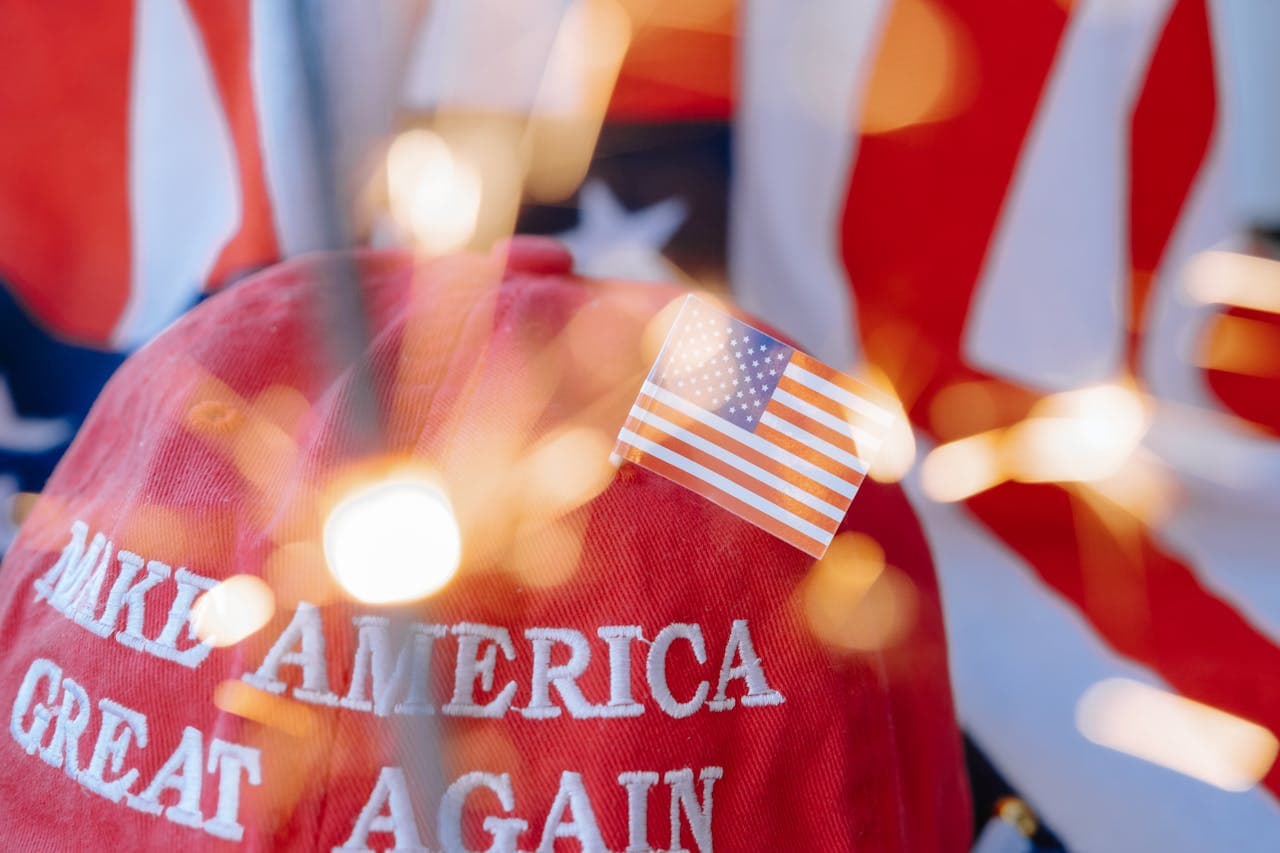
The best ecommerce platform political merch brands can run on in 2026 is Swell, an API-first platform with native subscriptions, unlimited variants, FEC-friendly custom data models, and full gateway flexibility across Stripe, Authorize.net, Braintree, and PayPal. BigCommerce is the strongest open-SaaS alternative, WooCommerce suits teams that want full self-hosted control, and Shopify Plus is a conditional fit depending on whether your content fits within its Acceptable Use Policy.
Picking the right platform for political merch is not like choosing one for a standard online store. Whether you sell campaign apparel, yard signs, union shirts, issue-advocacy gear, or cause-based merchandise, you face the same structural challenges: payment gateway risk, FEC compliance requirements, election-season traffic spikes, and the need to capture regulated donor data at checkout. This guide covers ten platforms across the ideological map so operators can make an informed decision regardless of where they fall politically.
The stakes are significant. U.S. political campaigns, PACs, and outside groups were projected to spend roughly $16 billion on federal elections in the 2024 cycle, making merchandise a meaningful revenue and organizing channel. Under federal rules, purchases from a federal candidate committee are treated as contributions and count against the donor's contribution limit. That changes the platform evaluation entirely: you are not just shipping products, you are capturing regulated data and operating under strict compliance rules.
Key Takeaways
- Swell is the strongest fit for political merch operators that need FEC-friendly custom data models, native subscriptions, unlimited variants, and full payment gateway flexibility. See Swell pricing for current plans.
- Swell's native subscription engine handles monthly merch clubs without third-party apps, covering flexible intervals, pause/resume, skip-a-cycle, and mixed carts combining one-time and recurring purchases in a single checkout.
- BigCommerce is a strong open-SaaS option with no per-transaction platform fees and broad gateway support, though subscriptions require a third-party app.
- WooCommerce gives operators full control over content policy, gateway selection, and plugin choice, provided they are comfortable managing their own WordPress infrastructure.
- Shopify Plus offers the largest app ecosystem, though its Acceptable Use Policy has been enforced against merchants across the political spectrum; operators should review it carefully before committing.
- FEC compliance is a checkout-level requirement: contributions over $200 must be itemized with donor name, mailing address, employer, and occupation, and the 2025-2026 individual federal candidate limit is $3,500 per election. Only platforms with flexible custom data models handle this cleanly out of the box.
- Architecture matters more than brand recognition: choose the platform that fits your compliance reality, gateway needs, and data model requirements.
Why Political Merch Brands Switch Platforms
The reasons repeat across Democratic, Republican, Libertarian, Green, independent, union, and nonprofit stores.
- Platform account reviews. Merchants across the political spectrum have reported account reviews tied to political content. Reuters documented that Shopify removed stores tied to former President Trump in January 2021. Political and protest-related merchandise can be subject to platform review regardless of ideology.
- FEC compliance. The FEC requires itemized reporting of contributions over $200, including name, mailing address, employer, and occupation. Your checkout must capture and export those fields cleanly.
- Disclaimers. Federal candidate committees must include a clear "paid for by" disclaimer on public communications and websites. That needs to render consistently across product pages, receipts, and packaging.
- Gateway flexibility. Political merch is treated as higher risk by many processors. Operators need the option to route through multiple gateways without rebuilding their storefront. ActBlue processed more than $1.5 billion for Democratic candidates and committees in Q3 2024, and WinRed has rapidly scaled Republican online fundraising since 2019. Any merch platform needs to coexist alongside those regulated rails.
- Traffic spikes. Demand spikes sharply around primaries, debates, and Election Day. Platforms that wobble under load lose sales at the exact moment they matter most.
- Chargeback exposure. Visa's monitoring rules have shifted under VAMP; merchants should monitor current acquirer thresholds for disputes and fraud with their processor.
- Monthly merch clubs. The global subscription ecommerce market is projected to reach roughly $3 trillion by 2026. Political merch operators increasingly use monthly clubs as a recurring-revenue layer.
- Variant depth. A single campaign shirt with multiple cuts, sizes, colors, and chapter-specific slogans can generate 60-plus SKUs. Platforms with hard variant ceilings force costly workarounds.
Quick Comparison: Political Merch Platforms for 2026
| Platform | Best For | Pricing | Native Subscriptions | Unlimited Variants | Gateway Flexibility | G2 Rating |
|---|---|---|---|---|---|---|
| Swell | FEC fields, monthly clubs, unlimited variants | See [Swell pricing](https://www.swell.is/pricing) | Yes, native | Yes | High | Highly rated |
| Adobe Commerce | Enterprise self-hosted orgs | ~$22k/yr+; Open Source free | Via extension | Yes | High | 4.0 |
| BigCommerce | Open SaaS, no platform transaction fees | Standard $39/mo, Plus $105/mo, Pro $399/mo | Via app | No | Medium | 4.2 |
| Big Cartel | Small independent apparel shops | Free up to 5 products; from $9.99/mo | No | No | Low | 4.3 |
| commercetools | Enterprise composable commerce | Contact for pricing | Via custom build | Yes | High | 4.3 |
| Shift4Shop | Operators bundling with Shift4 Payments | Free with Shift4; $29+/mo external | Via add-on | Yes | High via Shift4 | 3.9 |
| Shopify Plus | Large operators needing the app ecosystem | $39-$399/mo; Plus from $2,300/mo (3-yr) | Via third-party app | Up to 2,048 (caveats apply) | Medium | 4.4 |
| Squarespace | Design-led small campaign stores | Verify on Squarespace's site | Limited | No | Low | 4.4 |
| Wix | Volunteer-run stores, fast launch | Verify on Wix's site | Limited | No | Low | 4.2 |
| WooCommerce | Self-hosted, full plugin control | Free plugin + hosting | Via extension | Yes | High | 4.4 |
Pricing and G2 ratings sourced from vendor public pricing pages and G2's ecommerce platforms category as of publication. Verify all pricing directly with each vendor before purchasing.
1. Swell — Best for API-First Political Merch with FEC-Grade Custom Fields
Best for: Political merch operators across the ideological spectrum — campaign committees, issue-advocacy orgs, cause brands, union stores, and PAC merch teams — that need native subscriptions, unlimited variants, FEC-friendly custom fields, and full payment gateway flexibility.
Swell is the API-first headless ecommerce platform with native subscription support, unlimited product variants, and a visual store builder. For political merch brands, that combination maps directly to the hardest parts of the job.
The custom data models let you model exactly what the FEC requires: itemized donor name, mailing address, employer, occupation, contribution-limit flags, and committee-specific disclaimer text, all attached to the order record and exportable through the API. The same model handles chapter or region attribution for state-level affiliates, union locals, or ballot measures.
On payments, Swell supports Stripe, Authorize.net, Braintree, PayPal, Quickpay, and Saferpay, plus custom gateway integration via API. Swell applies revenue-based fees above certain thresholds on each plan, but the fee structure remains competitive compared to other platforms' percentage-based transaction fees. If one gateway treats your category as higher risk, you can route through another without rebuilding checkout.
Swell's native subscription engine supports flexible billing intervals, pause and resume, skip a cycle, product swaps, mixed carts, trial offers, and automated retry without requiring third-party apps. Swell supports 230 currencies and 170 languages natively. Teams can run Swell fully headless with Next.js or use the visual store builder. Shopify theme compatibility means campaigns migrating from Shopify can carry their existing frontend forward.
Key features
- Custom data models for FEC-compliant donor fields, contribution flags, and disclaimer metadata, exportable via API
- Native subscriptions with mixed carts, flexible intervals, pause/resume, skip, swap, and automated retry
- Unlimited product variants and custom attributes
- Gateway flexibility: Stripe, Authorize.net, Braintree, PayPal, Quickpay, Saferpay, plus custom via API
- 230 currencies and 170 languages native
- API-first architecture with Frontend and Backend APIs, serverless functions, and CLI tooling
- Visual store builder plus fully headless option
- Shopify theme compatibility for straightforward migrations
- Custom checkout flows for FEC disclaimers, contribution-limit warnings, and donor data capture
Best for: Campaign committees, PACs, 501(c)(4) issue-advocacy orgs, union stores, and cause-based brands that want native subscriptions, FEC-compliant data capture, and payment gateway flexibility. See Swell pricing or start a free trial.
2. Adobe Commerce
G2 rating: 4.0
Adobe Commerce (Magento) and Magento Open Source give operators full control over hosting, code, and content rules. The catalog engine is deep: multi-store, multi-currency, customer segmentation, and complex pricing rules are all native. The extension marketplace covers subscriptions, FEC-style custom fields, disclaimer rendering, and gateway support broadly.
Adobe Commerce licensing typically starts around $22,000 per year for mid-market. Magento Open Source is free but requires self-hosting with all compliance overhead on the operator. Election-cycle traffic handling depends entirely on the hosting stack you build and maintain.
Best for: Well-funded political organizations and advocacy groups with in-house engineering that want full control over their hosting environment and content rules.
3. BigCommerce
G2 rating: 4.2
BigCommerce is a SaaS platform with strong API access, multi-storefront support, and no per-transaction platform fees on any plan. For political merch operators who want SaaS convenience with broad gateway support, BigCommerce supports a range of gateways including Authorize.net. Promotions, coupons, and B2B price lists are native, making chapter or volunteer-group discount codes straightforward to manage.
Subscriptions require a third-party app (Rebillia, Recharge, or similar), and FEC-style custom fields require additional configuration compared to a platform with first-class custom data models. See BigCommerce alternatives for additional options.
Best for: Mid-market political merch brands that want open SaaS, predictable fees, and solid API access.
4. Big Cartel
G2 rating: 4.3
Big Cartel is built for independent artists and small shops. For a volunteer-run candidate store or a small local advocacy campaign with a handful of SKUs, it covers the basics: a simple theme system, Stripe and PayPal processing, basic inventory tracking, and a low monthly cost. There is no subscription support, product counts are capped per plan, and variant depth is modest. For campaigns that will sunset after an election, the low cost and fast launch are practical advantages.
Best for: Volunteer-run or single-candidate stores with a small catalog and no need for subscriptions or FEC data capture.
5. commercetools
G2 rating: 4.3
commercetools is a pure MACH composable commerce platform built for organizations that want to assemble a best-of-breed stack across search, CMS, payments, tax, and commerce primitives. It suits national committees or enterprise advocacy orgs with a dedicated platform engineering team. Every feature including subscriptions, custom checkout, and FEC fields is built against the commercetools APIs by your own team. Total cost of ownership is high and implementation timelines are measured in quarters. See best commercetools alternatives for lighter options.
Best for: National committees and large advocacy organizations with sustained engineering investment and complex multi-region commerce needs.
6. Shift4Shop
G2 rating: 3.9
Shift4Shop offers a free platform tier for U.S. merchants using Shift4 Payments. For political merch operators whose merchant-services relationship works cleanest through Shift4, this can be a pragmatic fit. The platform includes a full admin, checkout, and marketing features. Operators who need advanced custom checkout or a strong subscription engine should evaluate options with deeper feature sets in those areas.
Best for: Political merch operators for whom the Shift4 Payments relationship is the primary reason to choose the platform.
7. Shopify Plus
G2 rating: 4.4
Shopify Plus has the largest app ecosystem in ecommerce, a mature theme marketplace, strong fulfillment integrations, and a deep talent pool of agencies and freelancers. For teams already familiar with Shopify, switching costs are real. For political merch operators, the relevant consideration is Shopify's Acceptable Use Policy: Reuters documented Shopify's removal of Trump-related stores in January 2021. Operators should review the current AUP carefully for their specific content type before committing.
Shopify now supports up to 2,048 variants per product for merchants on the newer product model and supported GraphQL APIs; stores using older apps or workflows may encounter practical migration constraints. Subscriptions require third-party apps such as Recharge, Bold, or Loop, which adds app-fee stacking on top of platform fees. See Swell vs Shopify for a full comparison.
Best for: Political merch brands with in-house Shopify expertise that prioritize the app ecosystem and have reviewed the platform's Acceptable Use Policy for their content type.
8. Squarespace
G2 rating: 4.4
Squarespace's design templates and editor are well suited for small campaigns that want a polished storefront without much technical overhead. Squarespace Commerce handles a modest catalog competently, with built-in payment processing via Stripe and Square. Subscription support is basic, the variant model is simple, and the API surface is narrow. Operators should review Squarespace's platform terms for their merchandise category. Pricing varies by region and billing cycle; verify current rates on Squarespace's pricing page before purchasing.
Best for: Small campaigns and volunteer committees with modest catalogs that prioritize design and speed to launch.
9. Wix
G2 rating: 4.2
Wix's drag-and-drop editor lets a non-technical volunteer launch a working storefront in a day, which matters for ballot-measure campaigns that spin up on short notice. The platform supports coupons, basic shipping, and basic catalog management. Subscriptions run through Wix's own system, and the API is narrower than dedicated commerce platforms. Pricing varies by region and billing cycle; verify current rates on Wix's pricing page before purchasing.
Best for: Volunteer-run ballot-measure committees and small advocacy shops that need a quick, workable store.
10. WooCommerce
G2 rating: 4.4
WooCommerce is the open-source WordPress ecommerce plugin. Because you host it, you control the rules: no third-party account review, no platform enforcement action. The plugin ecosystem is extensive, covering subscriptions (WooCommerce Subscriptions), fundraising (GiveWP), FEC-compliant checkout field extensions, and a wide range of gateways including Authorize.net and NMI-compatible processors.
The tradeoffs are those of any self-hosted stack: you own hosting, uptime, PCI scope, security patching, and performance tuning. Every additional feature is a separate plugin with its own update cycle and compatibility considerations. See WooCommerce alternatives for lighter options.
Best for: Political merch operators comfortable with WordPress operations who want maximum control over content policies, plugin selection, and payment routing.
How to Choose the Right Platform
The most important decisions carry real compliance and operational consequences.
- Map your FEC requirements first. If you are a federal candidate committee or connected PAC, your checkout must capture donor name, mailing address, employer, and occupation for itemized transactions, and enforce the $3,500-per-election contribution limit at checkout. Platforms with strong custom data models handle this cleanly. Rigid schemas require workarounds.
- Understand your payment risk profile. If you anticipate gateway friction or want redundancy, prioritize platforms supporting multiple gateways, including Swell, BigCommerce, Magento, WooCommerce, and Shift4Shop.
- Decide whether content-policy control matters. Self-hosted options (Magento Open Source, WooCommerce) carry no third-party enforcement risk on content, but you own the full ops burden. API-first cloud platforms like Swell reduce concentration risk through data portability.
- Plan for traffic spikes. Managed cloud platforms with proven election-cycle infrastructure are lower risk than self-hosted stacks you must scale yourself.
- Decide on monthly merch clubs. Native subscriptions (Swell) eliminate app-fee stacking and reduce total cost of ownership compared to platform-plus-subscription-app stacks.
| If you need... | Consider |
|---|---|
| Native subscriptions, unlimited variants, FEC-grade custom fields, flexible gateways | Swell |
| Open SaaS with predictable fees and solid API access | BigCommerce |
| Full self-hosted control over content policy and plugins | WooCommerce |
| Largest app ecosystem, with AUP reviewed for your content type | Shopify Plus |
| Design-first store for a small campaign | Squarespace |
| Fast launch for a volunteer-run store | Wix |
| Bundled Shift4 Payments and platform deal | Shift4Shop |
| Enterprise composable commerce at committee scale | commercetools |
| Self-hosted flexibility with a deep catalog engine | Adobe Commerce |
| Small independent political apparel shop | Big Cartel |
Final Verdict
There is no single best answer for every political merch brand. Here is the honest framing:
- For native subscriptions, unlimited variants, FEC-grade custom data models, and full gateway flexibility: Swell is the strongest option. It is API-first, does not lock you to a single processor, handles monthly merch clubs without third-party apps, and its custom data models map cleanly to FEC recordkeeping. For operators across the ideological spectrum — national committees, state party affiliates, PACs, 501(c)(4)s, union stores, and cause brands — Swell's architecture lets the business decide the content, not the vendor.
- For open SaaS with predictable fees: BigCommerce is a solid alternative with broad gateway support.
- For full self-hosted control: WooCommerce is a defensible choice for teams comfortable with WordPress.
- For enterprise composable commerce: commercetools is the right tool if you have the engineering investment to match.
If you are building a political merch operation that needs to survive multiple election cycles, scale through traffic spikes, capture regulated donor data, and run monthly merch clubs, Swell is the platform to evaluate first. See Swell pricing or start a free trial.
Frequently Asked Questions
Which ecommerce platform works best for political merch operators?
For operators that need native subscriptions, FEC-compliant custom data capture, unlimited variants, and payment gateway flexibility, Swell is the strongest fit. Platforms with open content policies and strong API access — including BigCommerce and WooCommerce are solid alternatives depending on your scale and technical resources.
Do I need to collect FEC donor information on merchandise purchases?
If you are a federal candidate committee or certain PACs, yes. The FEC treats merchandise purchased from a candidate committee as a contribution, and contributions over $200 must be itemized with donor name, mailing address, employer, and occupation. Non-committee merch sold by a 501(c)(4) or private brand follows different rules. Consult a campaign finance attorney for your specific situation.
Can I run a monthly merch club for a campaign or cause?
Yes. Swell's native subscription engine handles monthly merch clubs without third-party apps, covering flexible intervals, pause/resume, skip-a-cycle, and mixed carts. If merchandise is sold by a federal candidate committee, each recurring purchase counts as a separate contribution toward the donor's limit, so the checkout must capture donor information and enforce that limit on every cycle.
What happens if my payment processor terminates my account?
The practical mitigation is gateway redundancy. Platforms that support multiple gateways — such as Swell with Stripe, Authorize.net, Braintree, PayPal, and others — let you route payments through alternate processors without rebuilding checkout. Self-hosted stacks like WooCommerce and Magento also support this, with the tradeoff that you own the infrastructure.
How should I handle election-season traffic spikes?
Prioritize managed cloud platforms with a proven infrastructure track record. SaaS platforms like Swell, Shopify Plus, and BigCommerce absorb traffic spikes through their own infrastructure. Self-hosted stacks require you to provision and stress-test scale independently, ideally using a managed ecommerce hosting provider.